
REQUEST INSTANT QUOTATION
[jet_search]
Video courtesy of Cessna.txtav.com
Cessna Citation Ascend Charter: Live Pricing & Availability
Where Every Altitude Becomes an Advantage
Data & Prices Updated September 2026 1
Charter a Cessna Citation Ascend for your next trip and receive verified pricing and tail-specific availability within hours. Prices range from $4,000 and $5,500 per flight hour. This page connects you directly to operators currently flying the Ascend, so you can confirm hourly rates, one-way repositioning options, and departure windows for the exact aircraft.
REQUEST INSTANT QUOTATION
[jet_search]
Every operator in our network is certified under Part 135 (or regional equivalent), with maintenance records and crew currency verified before any quote is issued. With a growing in-service fleet, positioning options across major hubs are typically available on short notice, giving you flexibility without sacrificing operational assurance.
Once the door seals and the engines settle into a low hum, the outside world fades away. The flat floor stretches ahead—a feature historically saved for super-midsize jets—while oversized windows flood the cabin with natural light, highlighting hand-stitched upholstery and refined materials. It’s far more than basic transport; it’s a space built for those who expect quality as the baseline.
The Citation Ascend refuses to compromise on performance. Cruising at 441 knots, it effortlessly handles high-demand routes like Miami to New York or London to Geneva. With a 1,940 nautical mile range (four passengers, NBAA IFR reserves at high speed), it opens up seamless regional travel and efficient transatlantic staging hops without forcing extra fuel stops. For flight departments and charter brokers alike, it’s a high-utility asset that justifies its value on every takeoff.
Entering service as the fifth evolution of the 560XL series, the Citation Ascend builds on a platform with over 1,000 deliveries and a proven record for short-field performance. But this isn’t just a minor facelift. Textron re-engineered the flight deck, overhauled the cabin acoustic insulation, and brought in high-end connectivity usually reserved for larger jets. Charting an Ascend in 2026 offers a clear view of where modern midsize aviation is heading.
Why Choose Us for Private Jet Charter
Every operator in our network holds current FAA Part 135 certification, or the EASA equivalent for European operators, the regulatory standard governing commercial charter operations, crew duty limits, and aircraft maintenance oversight. Combined with ARGUS/Wyvern ratings, this means every aircraft you fly with us has passed both government-mandated safety audits and independent third-party vetting.












Cessna Citation Ascend Technical Overview
Key Specifications
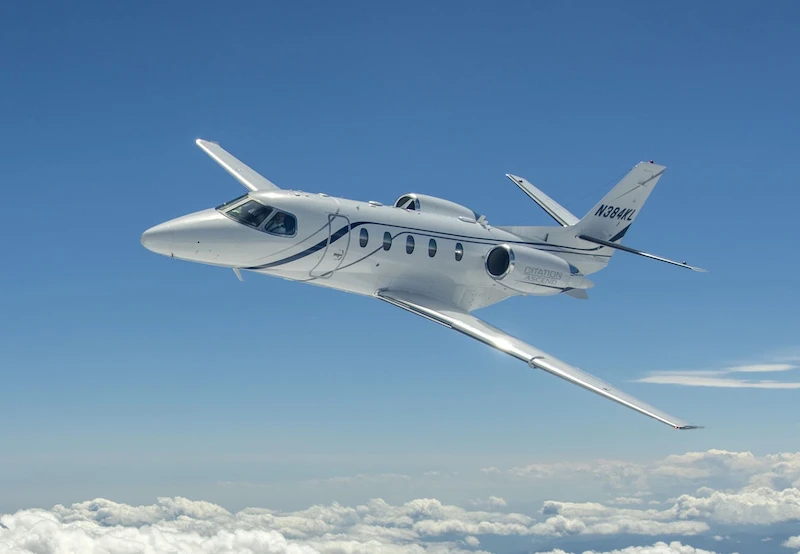
All performance figures are sourced from Textron Aviation’s official Citation Ascend product data. Field performance assumes sea level, MTOW, standard day conditions, and a level, dry, paved runway. Range is based on a four-passenger mission at high-speed cruise with NBAA IFR reserves (100 nm alternate).
| Specification | Value |
|---|---|
| Maximum Range (4 passengers, HSC, NBAA IFR reserves) | 1,940 nm / 3,593 km |
| Maximum Cruise Speed | 441 ktas / 817 km/h |
| Typical Seating Configuration | 9 passengers |
| Cabin Height (Standard / Optional Raised) | 60 in / 1.52 m |
| Cabin Width | 66 in / 1.68 m |
| Cabin Length | 18 ft 6 in / 5.64 m |
| Maximum Takeoff Weight (MTOW) | 20,500 lb / 9,299 kg |
| Full Fuel Payload | 900 lb / 408 kg |
| Takeoff Field Length (at MTOW, sea level) | 3,800 ft / 1,158 m |
| Maximum Operating Altitude | 45,000 ft |
| Time to Climb | FL430 in 26 minutes (direct) |
| Baggage Capacity (internal) | 80 cu ft |
REQUEST INSTANT QUOTATION
[jet_search]
Cessna Citation Ascend Interior & Amenities
The Cabin Experience
Opción corregida, humanizada y reducida:
When designing the Ascend’s interior, Textron Aviation looked past the midsize segment, taking cues directly from the Citation Latitude and flagship Longitude. The result brings that same flat-floor, super-midsize feel to a lighter, more agile platform.
Interior Layout & Comfort
Opción corregida, humanizada y reducida:
Replacing the stepped aisle of its predecessors, the Ascend’s flat floor lets passengers move freely and swivels seats without obstruction. The cabin stretches 18’6″ long and 66″ wide, with a standard height of 60″ that expands to 68″ under optional configurations. High-end stone or luxury vinyl flooring completes the refined look.
Reengineered windows are roughly 15% larger than the XLS Gen2’s, pulling in far more natural light. Passengers can adjust wireless translucent or opaque shades right from their seats, while optional illuminated window rings add a understated ambient glow at cruise altitude.
Acoustics
Multi-layer acoustic insulation and aerodynamic tweaks bring in-flight noise down to sedan-like levels. Passengers can talk or hold business calls at cruise altitude without raising their voices. Complementing the soundproofing, the new Pratt & Whitney PW545D engines run significantly quieter than the older PW545C units, keeping the aft cabin remarkably peaceful.
Connectivity & Technology
Standard connectivity is delivered via Gogo Avance L3 Max Wi-Fi, providing high-speed domestic coverage for streamed video, cloud collaboration, and real-time communication. Those operating beyond domestic corridors can specify Gogo Avance L5 or the globally reaching Gogo Galileo HDX system, which pairs Wi-Fi with worldwide voice calling capabilities, ensuring the Ascend keeps its occupants connected from Aspen to Amsterdam.
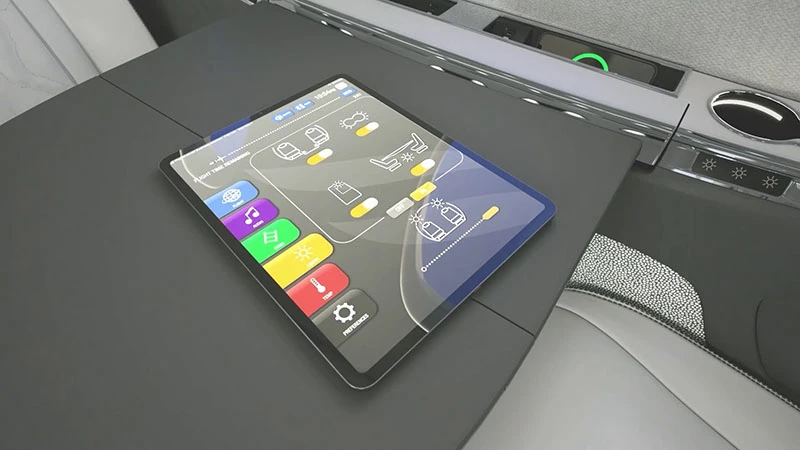
Every seat has access to a charging point, with 19 USB charging ports, three universal AC outlets, and first-in-class wireless phone charging distributed throughout the cabin. The optional Bongiovi immersive sound system brings audiophile-grade acoustics to in-flight entertainment. Cabin lighting, temperature, window shades, and entertainment are all managed wirelessly through an intuitive control system accessible from any seat.
Baggage & Accessibility
The forward galley is appointed for serious mission requirements: catering storage, refreshment preparation, and the kind of thoughtful provisioning that ensures a transcontinental leg feels as civilised at the four-hour mark as it did on boarding.
The internal baggage compartment offers 80 cubic feet of pressurised stowage, ample capacity for golf bags, ski equipment, or the luggage demands of a nine-passenger corporate group.

REQUEST INSTANT QUOTATION
[jet_search]
Cessna Citation Ascend Powerplant & Avionics
Performance & Engineering
Propulsion: Pratt & Whitney Canada PW545D turbofans
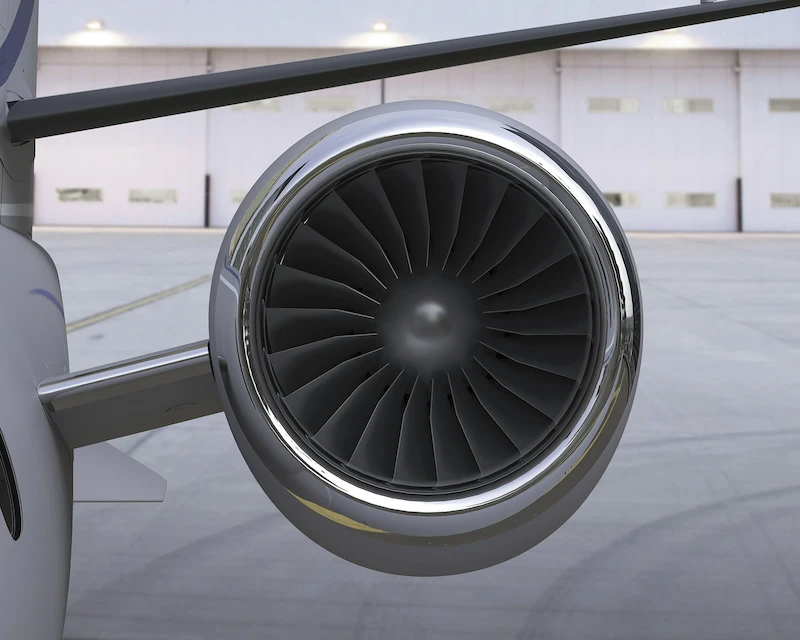
Twin Pratt & Whitney PW545D turbofans—delivering 4,213 lbs of thrust each with dual-channel FADEC—mark a clear performance leap over the XLS Gen2’s PW545C engines. Better fuel burn and stronger hot-and-high performance translate to more range, higher full-fuel payloads, and easier departures from short or challenging runways like Aspen, Telluride, or London City.
Sustainability & SAF Compatibility
The Citation Ascend’s twin Pratt & Whitney Canada PW545D turbofans are certified to operate on blends of up to 50% Sustainable Aviation Fuel (SAF) mixed with conventional Jet A kerosene.
As with all Cessna and Beechcraft turbine aircraft, buyers can take delivery fueled with SAF and refuel with it wherever available, supporting the industry’s broader push toward net-zero carbon emissions by 2050.
Flight Deck – Avionics
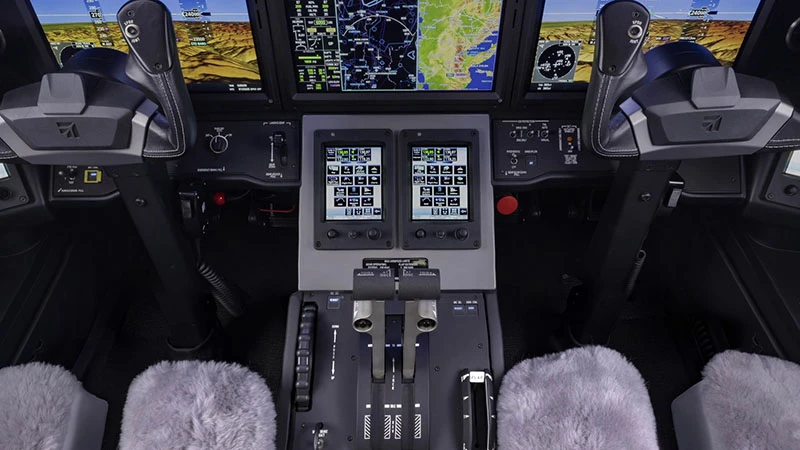
The Ascend’s flight deck is built around the Garmin G5000 integrated avionics suite — a complete replacement of the Collins Aerospace Pro Line 21 cockpit that equipped the XLS Gen2.
Three 14-inch ultra-high-resolution displays form the primary instrument cluster, with split-screen capability enabling pilots to monitor multiple data streams simultaneously. The package includes:
- Dual flight management systems (FMS) with full GPS/SBAS integration
- Full-flight regime autothrottle with flight-envelope protection, reducing pilot workload on all phases of flight
- Synthetic vision technology (SVT), rendering terrain, obstacles, and traffic as a real-time three-dimensional environment even in instrument meteorological conditions
- Garmin SafeTaxi 3D exocentric view — the first aircraft in service to feature this capability, enhancing taxiway situational awareness at complex airports
- Advanced weather detection and avoidance with Next Generation radar integration
- Cockpit satellite voice and data transceiver (SATVOICE) as standard, with an optional second Iridium data radio and CPDLC (Controller-Pilot Data Link Communications) for more direct oceanic routing between North America and Europe
- Four Garmin touchscreen controllers (GTCs) for intuitive system management across all phases of flight
The Honeywell RE100 [XL] APU features full unattended operation with automatic bleed-leak detection, letting operators cool or heat the cabin before passengers arrive. This cuts ground fuel burn and avoids relying on noisy, polluting GPU units. For tight schedules and limited FBO slots, that unattended capability speeds up pre-flight prep right when every minute counts.
Textron’s AReS diagnostic system tracks over 9,000 parameters mid-flight, streaming fault data directly to ground crews via LinxUs Air. By flagging and troubleshooting issues before touchdown, maintenance teams can address anomalies immediately and minimize downtime.
Cessna Citation Ascend Objective Assessment
Strengths & Considerations
Strengths
- Exceptional short-field access. A 3,800 ft MTOW takeoff field length gives the Ascend access to private airports and city-centre airfields — such as London City — that are simply beyond the reach of larger competitors. For operators whose itineraries include multiple secondary destinations, this is a decisive operational advantage.
- Best-in-class maintenance economics: Extended inspection intervals—800 hours or 18 months—paired with LinxUs Air real-time diagnostics keep annual maintenance costs down and dispatch reliability high compared to older 560XL models. For charter clients, those operational savings directly reflect in more competitive hourly rates.
- Super-midsize cabin experience in a midsize platform: The flat floor, enlarged windows, wireless cabin controls, and Garmin G5000 avionics position the Ascend well above its certificated category in perceived value, creating a compelling case for charter clients who prioritise comfort and technology over maximum range.
Considerations
- Range remains a category ceiling: At 1,940 nm with four passengers at high-speed cruise, the Ascend is optimised for short-to-medium-haul missions. Operators requiring true transatlantic or transcontinental non-stop capability will need to look toward the Citation Longitude or super-midsize alternatives, the Ascend is not that aircraft.
- Evolutionary, not revolutionary, lineage: The Ascend is a refined evolution of the Citation 560XL type certificate, not a clean-sheet design. While the engines, avionics, and interior are major upgrades, the core airframe geometry, like the fuselage cross-section and wing planform, remains tied to a decades-old platform.
REQUEST INSTANT QUOTATION
[jet_search]
Cessna Citation Ascend Competitive Landscape
Market Comparison
The Citation Ascend competes in a midsize segment defined by buyers who want super-midsize comfort without super-midsize operating costs. Its two most direct rivals offer instructive contrasts.
| Specification | Cessna Citation Ascend | Embraer Praetor 500 | Gulfstream G300 |
|---|---|---|---|
| Max Range (nm) | 1,940 | 3,340 | 3,600 |
| Max Cruise Speed | Mach 0.75 | Mach 0.83 | Mach 0.85 |
| Typical Seating | Up to 9 | Up to 9 | Up to 10 |
| Cabin Height | 5 ft 0 in | 6 ft 0 in | 6 ft 1 in |
| Cabin Width | 5 ft 6 in | 6 ft 10 in | 6 ft 11 in |
| MTOW (lb) | 20,500 | 37,567 | 39,750 |
| Takeoff Distance (ft) | 3,800 | 4,222 | 4,780 |
| SAF Compatible | Not specified | Yes | Yes |
| Price range | From $4,000/hr | From $4,500/hr | From $6,000/hr |
Cessna Citation Ascend vs. Embraer Praetor 500
The Embraer Praetor 500 is the Ascend’s most technically formidable midsize adversary, offering a four-passenger range of approximately 3,340 nm — a figure that eclipses the Ascend by nearly 1,400 nm and enables true non-stop transatlantic operations at lower latitudes. Powered by Honeywell HTF7500E engines and equipped with Honeywell Primus Epic 2 avionics, the Praetor 500 also features a flat-floor cabin with stand-up headroom.
Where the Ascend claims an edge: its shorter takeoff field length (enabling more destination flexibility), and the arguably richer CMS touchpoints of the Garmin G5000 flight deck. For operators whose missions stay within the 2,000 nm envelope, the Ascend’s economics are compelling. For those who need New York to Lisbon non-stop, the Praetor 500 holds the advantage.
Cessna Citation Ascend vs. Gulfstream G300
Picking between the Cessna Citation Ascend and the Gulfstream G300 really comes down to how you plan to fly.
The Ascend is built for short-field agility and keeping hourly costs down. With a 1,940 nm range, a 441-knot cruise, and the ability to get off the ground in just 3,800 feet, it excels at regional routes and pulling into smaller regional airfields.
The G300 moves you into super-midsize territory. It steps up the performance with a 3,600 nm legs at Mach 0.85, putting transatlantic missions well within reach, while still getting out of 4,780-foot runways. Inside, passengers get a noticeably wider and taller cabin (6’1″ by 6’11” compared to the Ascend’s 5’0″ by 5’6″) and seating for up to ten.
Naturally, that extra space and legs show up on the direct operating costs: expect to run around $4,000 an hour on the Ascend versus closer to $6,000 on the G300. If short-runway access and lean economics are the priority, the Ascend makes complete sense. If you need true long-haul capability and cabin stretch-out room, the G300 is worth the extra spend.
FREQUENTLY ASKED QUESTIONS
Cessna Citation Ascend Charter Specifications & Booking Essentials
How much does it cost to charter a Citation Ascend?
Based on its position as the direct successor to the Citation XLS and its comparable midsize-class specifications, hourly charter rates are expected to fall in a similar range to other midsize jets, generally between $4,000 and $5,500 per flight hour. Request a current quote for the most accurate, up-to-date pricing as more Citation Ascend aircraft enter the charter fleet.
Is luxury catering included in the Citation Ascend charter price?
As with most midsize jet charters, standard catering is generally bundled into the base hourly rate, while premium or customized catering requests are arranged separately. Confirm specifics with your operator when booking, since the Citation Ascend’s charter service offerings are still being standardized across the fleet.
Are there any empty-leg options for the Citation Ascend?
Empty-leg availability on the Citation Ascend is currently limited given how recently the aircraft entered commercial service. As more units are delivered and enter charter and fractional programs, empty-leg opportunities are expected to grow. In the meantime, the closely related Citation Latitude and Citation XLS+ offer comparable cabin experiences with more established empty-leg availability.
How many passengers can the Citation Ascend carry?
The Citation Ascend is configured for typical midsize-cabin seating, with a flat-floor layout designed for full-cabin mobility on longer sectors. Confirm exact seating configuration for your requested tail when you submit a request, since interior layouts can vary by operator.
What is the range of the Citation Ascend, and which routes can it fly nonstop?
The Citation Ascend is built for transcontinental-class missions, capable of connecting most major city pairs within the continental US nonstop, with international sectors possible depending on winds and payload. Verify mission-specific range against the operator’s performance data for your exact routing.
How far in advance do I need to book a Citation Ascend charter?
Many Citation Ascend charters can be arranged with short notice given the aircraft’s expanding operator network, though earlier requests allow more flexibility on tail selection and positioning costs. Same-week and next-day availability is common; submit your dates for a live check.
How does the Citation Ascend compare to the Citation Latitude or similar midsize jets?
The Citation Ascend succeeds the Citation Latitude with updated avionics, refined aerodynamics, and cabin refinements while retaining a comparable stand-up, flat-floor cabin. Against other upper-midsize competitors, it is typically positioned on efficiency and updated systems rather than cabin size alone.
Can I bring pets or extra baggage on a Citation Ascend charter?
Most operators flying the Citation Ascend accommodate pets in the cabin and offer a generous baggage compartment suited to golf clubs, ski equipment, or multiple large cases. Confirm specific pet policies and baggage limits with your assigned operator prior to departure.
Do I need a membership or jet card to charter a Citation Ascend?
No membership is required to charter a Citation Ascend through this network; on-demand booking is available per trip. Jet card and block-hour options may also be available for frequent flyers seeking locked-in rates and priority access.
What Our Passengers Say
The Proof is in the Flight
Begin Your Journey
Request your Citation Ascend charter quote today
Request a live quote today and let our team match your mission with the right aircraft and verified operator in minutes.
REQUEST INSTANT QUOTATION
[jet_search]
1 All charter rates quoted on request. Availability subject to operator schedule. Specifications sourced from manufacturer data and may vary by serial number and operator configuration. The rates and price ranges displayed on this website are for informational and estimation purposes only. Actual charter costs may vary based on aircraft availability, operator positioning, seasonal demand, real-time fuel surcharges, landing fees, and specific flight itineraries. InstantPrivateJet.com is an independent marketplace and information resource. We do not own, manage, or operate aircraft. All charters are arranged, quoted, and fulfilled directly by third-party air carriers certified by the FAA (or equivalent civil aviation authorities). Final quotes and legally binding terms will be provided directly by the operating air carrier prior to booking.