
Heavy Jet & Ultra-Long-Range Jet Charter
REQUEST INSTANT QUOTATION
Request a quote for your next heavy jet charter
Heavy jets are the category built for the flights that matter most: transatlantic crossings, coast-to-coast redeyes, and multi-day international itineraries where the cabin needs to work as hard as the destination.
From the Embraer Legacy 600 up to the Gulfstream G800, this fleet spans roughly 3,900 to 8,200 nautical miles of nonstop range, seats up to 19 passengers, and includes full-galley catering, multiple cabin zones, and on the longest-range models, private staterooms with flat-bed sleeping.
Below, compare every heavy jet and ultra-long-range jet in our network, see typical hourly pricing, and request an instant quote for your route.
What Defines a Heavy Jet?
A heavy jet is a large-cabin private aircraft built for long-haul and intercontinental travel, typically offering 3,500 to 8,000+ nautical miles of nonstop range, seating for 10 to 19 passengers, and a stand-up cabin with a full galley and enclosed lavatory.
Unlike midsize jets, heavy jets are engineered specifically to connect distant city pairs — New York to London, Los Angeles to Tokyo, Dubai to São Paulo — without a fuel stop, while giving passengers room to work, dine, and sleep in transit.
Who Charters a Heavy Jet?
- Corporate teams flying 6–12 executives on the same itinerary without commuting through a hub
- Families crossing the Atlantic or Pacific who need galley meals and a lie-flat option for overnight legs
- Deal teams and roadshows visiting 3–4 cities in a single day with an aircraft on standby
- Groups relocating seasonally between US and European or Caribbean residences
Heavy Jet vs. Ultra-Long-Range Jet: What’s the Difference?
The difference is nonstop reach, not size:
- A heavy jet, such as the Falcon 2000LXS or Gulfstream G450, typically covers 3,900 to 5,500 nautical miles, enough for New York to London or Los Angeles to Honolulu, but often requiring a fuel stop on the longest transpacific or Australia-bound routes.
- An ultra-long-range jet, such as the Gulfstream G650, G700, G800, or Bombardier Global 7500/Global 8000, extends that to 6,750–8,200 nautical miles, connecting city pairs like New York to Hong Kong or Los Angeles to Sydney in a single nonstop leg.
Ultra-long-range models also add a dedicated crew rest area or private stateroom for the longest missions. If your route crosses more than one ocean, or exceeds twelve hours in the air, an ultra-long-range jet is usually the right call; for most transatlantic and coast-to-coast missions, a heavy jet delivers the same comfort at a lower hourly rate.
Explore Our Ultra-Long-Range Jet Fleet
Every ultra-long-range aircraft below can connect intercontinental city pairs nonstop. Select a model to see its exact range, cabin configuration, and estimated hourly pricing.
Gulfstream G800 Charter – Price & Availability for Nonstop Global Range
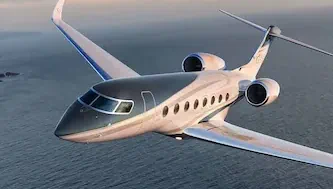
Gulfstream G700 Charter – Live Pricing & Global Availability

Gulfstream G650 Charter: Live Pricing & Same-Day Availability

Gulfstream G550 Charter: Book From $8,500/Hour

Dassault Falcon 8X Charter | Price & Availability

Bombardier Global 8000 Charter: From $16,000/Hour

Bombardier Global 7500 Charter: Rates from $13,000/hr & Availability

Bombardier Global 6000 Charter | From $10,500/hr – Instant Quote

REQUEST INSTANT QUOTATION
Explore Our Heavy Jet Fleet
Every heavy aircraft below is available for on-demand charter. Select a model to see its exact range, cabin layout, and estimated hourly pricing.
Gulfstream G450 Charter: Rates from $7,500/hr & Specs

Falcon 900LX Charter: Price, Specs & Booking | $8,500/hr

Falcon 2000LXS Charter | From $6,850/Hr | Specs & Rates

Embraer Legacy 600 Charter: Rates & Live Availability
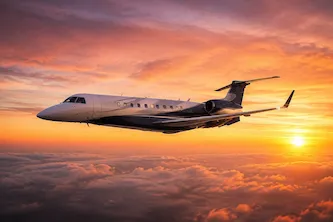
Bombardier Challenger 650 Charter: Price & Global Access

REQUEST INSTANT QUOTATION
How Much Does It Cost to Charter a Heavy Jet?
Heavy jet charter rates typically range from $5,000 to $19,000 per flight hour, depending on the aircraft’s range class and cabin size. A domestic transcontinental flight (Miami to Los Angeles) on an entry-level heavy jet averages $38,000–$48,000 all-in; a transatlantic route (New York to London) on an ultra-long-range aircraft typically runs $55,000–$90,000, including positioning, crew, and landing fees.
| Aircraft Class | Nonstop Range | Typical Hourly Rate |
|---|---|---|
| Heavy Jet (entry) | 3,900–4,750 nm | $5,000–$9,500/hr |
| Heavy Jet (long-range) | 5,000–6,750 nm | $8,500–$11,000/hr |
| Ultra-Long-Range Jet | 7,000–8,200 nm | $11,000–$19,000/hr |
Other Aircraft Categories



Frequently Asked Questions
What is the difference between a heavy jet and a midsize jet?
Heavy jets offer roughly double the range and up to twice the passenger capacity of midsize jets, along with a stand-up cabin, full galley, and enclosed lavatory. Midsize jets are better suited to domestic and short-international routes under 3,500 nautical miles.
Can a heavy jet fly nonstop across the Atlantic?
Yes. Every aircraft in this category can fly New York to London nonstop. Longer transatlantic routes to the Middle East or a return leg against strong headwinds may require an ultra-long-range model or a single fuel stop, depending on payload and weather.
How many passengers can a heavy jet carry?
Most heavy jets seat 10 to 14 passengers; the largest ultra-long-range models, such as the Gulfstream G800 and Bombardier Global 8000, can be configured for up to 19.
Do heavy jets have a bedroom or sleeping area?
Select ultra-long-range models offer a private stateroom or a divan that converts to a flat-bed sleeping surface, ideal for overnight transoceanic legs. Entry-level heavy jets typically offer reclining seats rather than a dedicated sleeping area.
How far in advance do I need to book a heavy jet charter?
Standard bookings are typically arranged with a few days’ notice, though same-day and next-day availability is often possible depending on aircraft positioning within our network.
REQUEST INSTANT QUOTATION